
How Insurance Companies Make Money
Many people buy insurance to protect themselves from unexpected events. But have you ever wondered how insurance companies make money? Insurance is not just about paying claims—it’s a complex business with several ways to earn profit. Understanding these methods can help you see why insurance is so important in modern life, and also why companies sometimes reject claims or raise prices.
Let’s look deeper at how insurance companies stay profitable and what strategies they use.
The Basic Business Model
Insurance companies collect premiums from customers. These are payments you make regularly—often monthly or yearly—to keep your coverage active. The company promises to pay if a covered event happens, like a car accident, house fire, or illness.
The key idea is risk pooling. Many people pay premiums, but only some will make claims. The company uses statistics to estimate how much will be paid out. If they collect more in premiums than they pay in claims, they make a profit.
Here’s a simple example: If 1,000 people buy car insurance for $500 each, the company collects $500,000. If only 50 people have accidents costing $5,000 each ($250,000 total), the company has $250,000 left. Of course, this is simplified—the real world is much more complex.
Underwriting: Assessing Risk
Insurance companies use underwriting to decide who gets coverage and at what price. Underwriting means evaluating how risky a customer is. If someone is likely to make a claim, they pay more. If they are less risky, they pay less.
Factors In Underwriting
- Age: Younger drivers usually pay more for car insurance.
- Health: For life insurance, healthier people get lower rates.
- Location: Living in a flood zone means higher premiums for home insurance.
- History: Previous claims or accidents can raise your price.
The company uses actuarial science, a mix of math and statistics, to predict risks. These predictions help set prices so the company makes money in the long run.

Credit: www.fe.training
Investment Income
One of the most powerful ways insurance companies earn profit is through investing the money they collect. Premiums are paid upfront, but claims may happen much later. This gives the company a big pool of money to invest.
How Investments Work
Insurance companies invest in bonds, stocks, real estate, and other assets. The goal is to earn a return while keeping risks low. For example, in 2022, US property and casualty insurers earned over $56 billion from investment income.
Here is a comparison of different investment types used by insurance companies:
| Investment Type | Risk Level | Common Use |
|---|---|---|
| Bonds | Low | Steady income, safe |
| Stocks | Medium-High | Growth, higher returns |
| Real Estate | Medium | Diversification, long-term gain |
Investment income is so important that some companies can survive even if their insurance operations lose money. They use float—the money held temporarily before paying claims—to earn extra profit.
Reinsurance: Spreading Risk
Insurance companies also protect themselves by buying reinsurance. This means they pay another company to take part of their risk. If a disaster happens, the reinsurer helps pay the claims. This helps insurance companies avoid huge losses from rare events like hurricanes or earthquakes.
Here’s how reinsurance compares to regular insurance:
| Type | Purpose | Who Buys |
|---|---|---|
| Insurance | Protect individuals/businesses | People, companies |
| Reinsurance | Protect insurance companies | Insurance companies |
Reinsurance lets insurance companies take on bigger risks and offer more coverage to customers without fear of bankruptcy.
Expense Management
To stay profitable, insurance companies must control their expenses. This includes staff salaries, office costs, advertising, and technology. Efficient companies can offer lower premiums and attract more customers.
Expense Breakdown
- Claims management: Handling and paying claims.
- Customer service: Helping policyholders.
- Sales and marketing: Finding new customers.
- Administration: Paperwork, legal, and compliance costs.
Companies often use technology to automate processes and reduce costs. For example, online claim filing is faster and cheaper than paper forms. Managing expenses well is a hidden skill that separates successful companies from those that fail.
Pricing Strategies
Setting the right premium is crucial. If prices are too low, the company loses money. If prices are too high, customers leave. Insurance companies use complex models and data to find the balance.
Common Pricing Strategies
- Competitive pricing: Match or beat rival companies to attract customers.
- Risk-based pricing: Charge more for risky customers.
- Bundling: Offer discounts if customers buy multiple policies (home + auto).
- Dynamic pricing: Adjust prices based on new data or trends.
Here’s a quick comparison of pricing strategies:
| Strategy | Benefit | Example |
|---|---|---|
| Competitive | Attracts customers | Lower rates than others |
| Risk-based | Protects profit | Higher rates for risky drivers |
| Bundling | Increases sales | Discount for buying home and auto |
| Dynamic | Adapts to market | Adjust prices monthly |
Insurance companies adjust prices constantly, using new data to improve profits.
Claims Management
A big part of profit comes from claims management. Insurance companies try to reduce how much they pay out by:
- Investigating claims: Checking for fraud or errors.
- Negotiating settlements: Offering less than the full claimed amount if possible.
- Using deductibles: Customers pay the first part of any claim.
Sometimes, companies reject claims that don’t meet policy rules. This can upset customers, but it protects the company’s finances.
Non-obvious Insights
Many beginners think insurance companies make money only from premiums. But investment income often makes a bigger impact. Also, reinsurance is a quiet but vital part of the industry—without it, many companies would collapse during disasters.
Another insight: insurance companies use data analytics and artificial intelligence to detect fraud and optimize pricing. This new technology helps them save millions every year.

Credit: fastercapital.com
Regulatory Environment
Insurance companies are heavily regulated. Governments set rules to protect consumers and keep companies honest. For example, US states require companies to have enough money to pay claims, and limit how much they can charge.
Regulation can change how companies make money. Some countries limit investment types, while others demand lower prices for certain customers. Companies must adapt to these laws to stay profitable.
Examples Of Successful Companies
Some companies are famous for their ability to make money and manage risks:
- Berkshire Hathaway: Uses insurance float to invest and grow profits.
- State Farm: Known for strong pricing and expense management.
- Allianz: Global leader in investment and risk management.
These companies show how different strategies—pricing, investment, reinsurance, and expense control—combine to create success.
Why Insurance Companies Sometimes Lose Money
Not every year is profitable. Bad years can happen if disasters strike or investment markets crash. For example, in 2017, US insurers paid over $100 billion for hurricane and wildfire claims.
If investment returns fall, or claims rise unexpectedly, companies can lose money. To survive, they use reinsurance, adjust prices, and cut expenses. Some leave risky markets or stop selling certain types of insurance.
The Role Of Technology
Modern insurance companies depend on technology for profit. They use:
- Online sales platforms: Reach more customers with lower costs.
- Big data analytics: Improve underwriting and pricing.
- Fraud detection software: Reduce false claims.
Technology makes companies more efficient and helps them compete in a fast-changing market. Those who invest in tech often see higher profits.
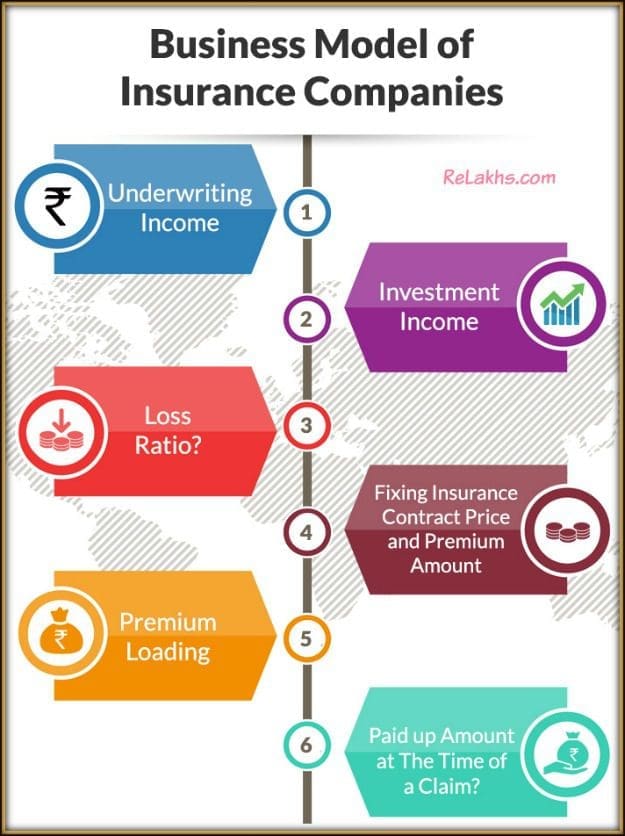
Credit: www.relakhs.com
The Future Of Insurance Profit
Insurance companies face new challenges—climate change, cyber risks, and changing regulations. To stay profitable, they must adapt. Some are developing new products, like cyber insurance. Others focus on data science and automation.
The industry is likely to keep changing, but the basic methods—premiums, investments, reinsurance, and expense control—will stay important.
If you want to read more about how insurance works worldwide, check out this detailed resource: Wikipedia.
Frequently Asked Questions
What Is Underwriting In Insurance?
Underwriting is the process where insurance companies evaluate the risk of a customer. They look at factors like age, health, history, and location to decide if you qualify and how much you pay. Good underwriting helps companies set fair prices and stay profitable.
How Do Insurance Companies Invest Money?
Insurance companies invest premiums in bonds, stocks, and real estate. They try to earn a steady return while keeping risks low. This investment income can be a major source of profit, sometimes more than what they make from selling policies.
Why Do Insurance Companies Reject Claims?
Claims can be rejected if they don’t meet the policy rules or if there is fraud. Companies check carefully to make sure the claim is valid. This protects their profits and keeps prices lower for honest customers.
What Is Reinsurance And Why Is It Important?
Reinsurance is when insurance companies buy coverage from other companies. It helps them spread risk and avoid huge losses from disasters. Without reinsurance, many insurance companies would go bankrupt after big events.
How Do Insurance Companies Use Technology?
Modern insurance companies use technology to automate processes, analyze data, detect fraud, and improve pricing. Technology makes companies more efficient and helps them compete in a changing market.
Insurance is a complicated business, but understanding how companies make money can help you make better choices as a customer. Whether you’re buying coverage or just curious, knowing these secrets gives you an advantage.
Read More:
- Reinsurance: What It Is and Why It Matters for Insurers
- Step-By-Step Guide to Filing an Insurance Claim: Expert Tips
- Understanding Risk And Insurance Pricing: A Simple Guide
- Digital Insurance (Insurtech) Trends in 2026: What to Expect
- AI and Automation in Insurance Industry: Transforming Claims Processing
- How to Read an Insurance Policy Document: A Simple Guide
- How to Switch Insurance Providers Without Losing Benefits Easily
- What to Do After an Accident: Essential Insurance Checklist